
Understanding Wikimedia audiences in the United States to achieve knowledge equity
Methodology
Survey
- Survey dates: 28 May – 7 June 2021
- Note: Low sample size for respondents falling into the LGBTQ+ community
- Two samples of US adults: 1,000 people of color, 500 people who identify as white (Note: Hispanic is combined with Latinx due to following census race/ethnicity categories)
Content Analysis
- 23,491 US-only biographies on English Wikipedia (only)
- Across set of pre-agreed topic areas
- Key measures analyzed (e.g. length)
- Language analysis
Key Insights
- There are significant differences between communities in how engaged they are with Wikipedia, how represented they feel, and how they perceive Wikipedia’s values around diversity, equity and inclusion.
- Women, across communities, are far more skeptical of Wikipedia’s support of social/equity movements.
- Black women and Hispanic women have the lowest engagement rates with Wikipedia, and have negative views of Wikipedia when it comes to inclusivity and support for racial and gender equality.
- Asian women have high awareness and are heavy users of Wikipedia, but feel unrepresented on the platform.
- White women have high awareness but relatively low engagement, and are highly skeptical of Wikipedia’s inclusivity, specifically in regard to Wikipedia’s racial and gender equality values.
- Black men and Hispanic men are less engaged, but generally perceive Wikipedia as inclusive.
- Asian men are highly engaged, generally have a positive view of the site, but feel somewhat unrepresented.
- White men are the most engaged with Wikipedia and most likely to perceive the site as inclusive and supportive of equality.
- The LGBTQ+ community are highly engaged with Wikipedia, and also perceive the site as inclusive*.
- Those with physical conditions and those with mental health conditions are highly engaged and supportive.
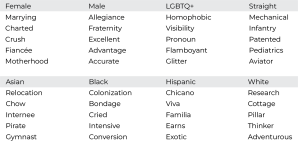
- Finally, there are clear differences in the types of language used in biographies between genders, ethnicities, and sexual identities emphasizing stereotypes and biases.
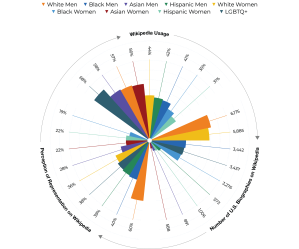
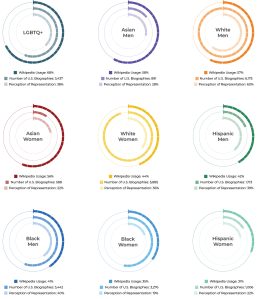
Usage and awareness
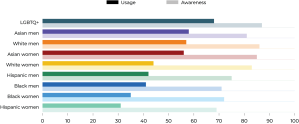
- The lowest levels of awareness of Wikipedia were among Hispanic women (69%), Black men (71%), Black women (72%)
- The highest levels of awareness of Wikipedia were among white women (83%), Asian women (85%), white men (86%), and LGBTQ+ people (87%)
- There is very low use of Wikipedia among Hispanic women (31%) and Black women (35%)
- Asian men and women are both highly aware and heavy users of Wikipedia
- White women have low usage (44%) despite higher awareness levels of Wikipedia
Perception and representation
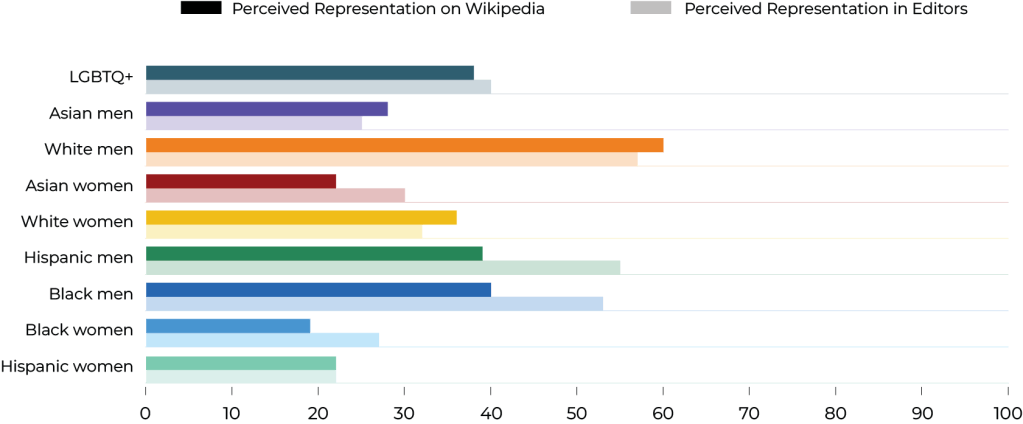
- Black, Hispanic, and Asian women have low percentages of feeling represented on Wikipedia
- Women do not believe their gender is represented among editors in Wikipedia
Content insights
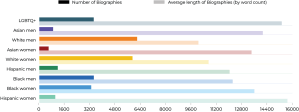
- A content analysis of biographies on English Wikipedia found that there are low numbers of Asian and Hispanic biographies.
- Biographies about white people are shorter on average.
- Note: this data is observing English Wikipedia, and Hispanics in the US may prefer to create Hispanic biographies on Spanish Wikipedia.
Language Bias
These are words with highest relative use for each group compared to other group(s) in biographies
Editing
- The race and ethnicity of US Wikipedia contributors showed significant underrepresentation for LatinX and especially Black editors.
- Although the proportion of editors identifying as women has increased 3.5 percentage points since 2019, women are still less interested than other groups in editing.
- Potential barries for women editors on Wikipedia could include that women don’t believe their gender is represented among editors. Furthermore, women are less likely to see Wikipedia as valuing gender equality.
See the complete report
Help us unlock the world’s knowledge.
As a nonprofit, Wikipedia and our related free knowledge projects are powered primarily through donations.
Donate now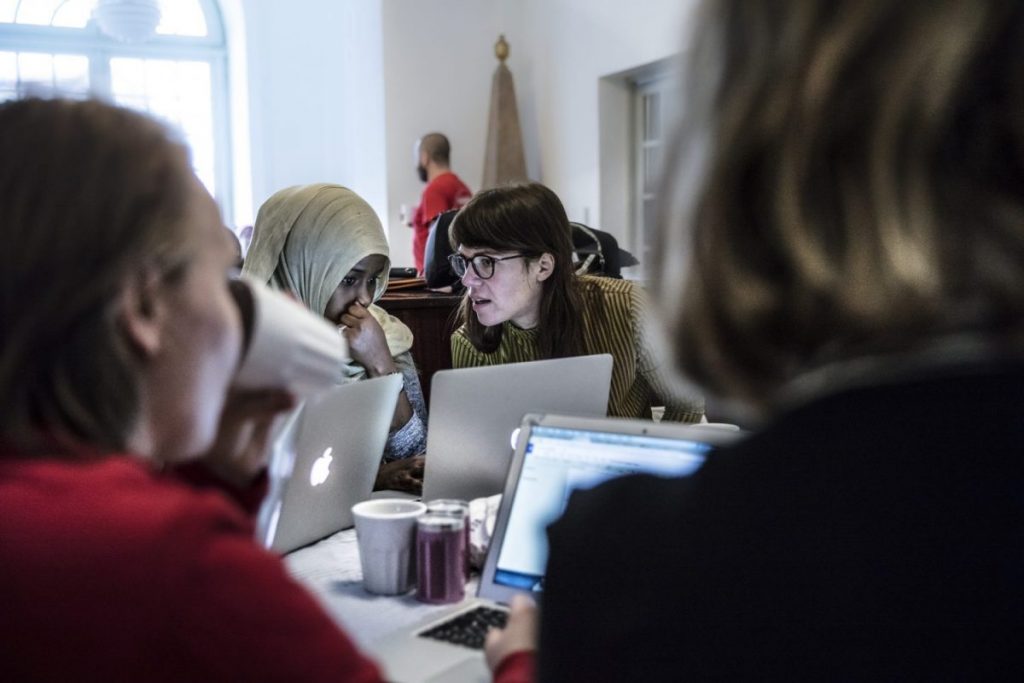
Contact us
Questions about the Wikimedia Foundation or our projects? Get in touch with our team.
ContactFollow
Carta aberta para proteger a Wikipédia e outros projetos de interesse público no Pacto Digital Global
Uma nova carta aberta da Fundação Wikimedia, a organização sem fins lucrativos que opera a Wikipédia e outros projetos Wikimedia, e afiliadas do Movimento Wikimedia ao redor do mundo, apela aos Estados Membros da ONU para protegerem a Wikipédia e outros projetos de interesse público no futuro Pacto Digital Global.
Wikimedia Foundation and global communities call on UN Member States to protect Wikipedia and other public interest projects in the Global Digital Compact
New open letter calls for UN Member States to include three key commitments in the Global Digital Compact that can allow public interest projects and the people who create them to thrive.
Photo credits


